
Exosome Regenerative Treatments are aesthetic protocols built around extracellular vesicles used as biological signalling messengers. In skin-focused care, the interest is not that exosomes are “stem cells” or a miracle injection, but that they can carry proteins, lipids and nucleic-acid signals between cells and are being studied for their potential role in skin-quality and recovery-focused protocols.
Exosomes are nanoscale extracellular vesicles released by cells. They carry molecular cargo involved in cell-to-cell communication. In aesthetic medicine, exosome-based products are being explored mainly as adjuncts to skin-renewal and post-procedure protocols, but evidence is still developing, products are not interchangeable and claims should stay more conservative than the marketing often suggests.
Cell signalling
Exosomes can transport molecular signals from one cell to another.
Skin-quality focus
The aesthetic goal is usually texture, hydration, recovery support and overall skin quality.
Adjunct protocol
They are commonly discussed alongside microneedling, RF or other controlled skin-renewal procedures.
Evidence still evolving
Clinical research is promising but product quality, source and protocol remain important limitations.
What Are Exosome Regenerative Treatments?
Exosome regenerative treatments are protocols that use exosome-containing or extracellular-vesicle-based formulations as part of aesthetic skin care. Their appeal comes from the biological role of extracellular vesicles as messengers: they can transport proteins, lipids and nucleic-acid material involved in communication between cells.
That makes exosomes interesting in regenerative aesthetics, particularly where the aim is to support skin quality or recovery after a controlled aesthetic procedure. It does not mean that every exosome product has the same composition, concentration, purity or clinical evidence.
Exosomes Are Not Stem Cells
Exosomes
Small extracellular vesicles. They are cell-free particles carrying biological signals and molecular cargo.
Stem cells
Living cells capable of self-renewal and differentiation. They are biologically and clinically different from exosomes.
The distinction matters. Exosomes cannot divide or become new tissue. They are better understood as communication packages released by cells rather than miniature stem cells.
How Exosome Regenerative Treatments Are Used in Aesthetic Protocols
In aesthetic settings, an exosome formulation may be used topically as part of a carefully selected skin-renewal or recovery-focused protocol. The exact sequence depends on the product, treatment and skin condition.
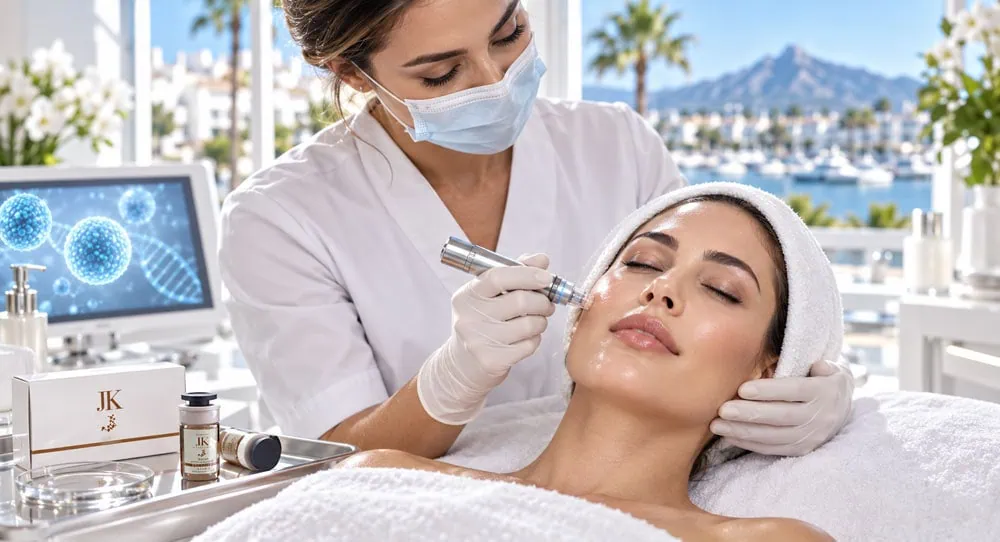
Assess the skin
The starting point is the current skin condition, sensitivity and previous procedures.
Create the treatment pathway
The formulation may be used alone or as an adjunct after a controlled procedure where appropriate.
Support recovery
The protocol focuses on skin comfort, quality and the recovery phase rather than promising instant structural transformation.
How Exosomes Communicate With Skin Cells
Exosomes are enclosed by a lipid membrane and can contain different combinations of proteins, lipids and nucleic-acid cargo. When extracellular vesicles interact with target cells, their cargo may influence cell signalling pathways.
This cell-to-cell communication is one reason exosomes are being studied in dermatology, wound healing and regenerative medicine. In cosmetic use, however, laboratory mechanisms should not automatically be translated into guaranteed clinical outcomes.
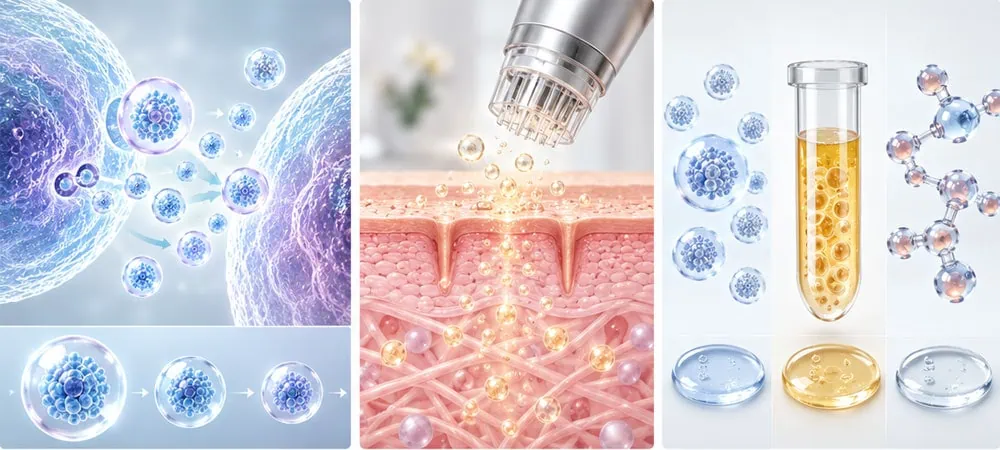
What Can Exosome Signalling Potentially Influence?
Cell communication
Extracellular vesicles can transfer biological information between cells.
Inflammatory signalling
Research is examining how different vesicle cargos may influence inflammatory pathways.
Extracellular matrix
Preclinical and early clinical research has explored effects related to matrix remodelling and skin repair.
Recovery pathways
Interest in aesthetics often centres on supporting recovery after controlled skin procedures.
Why Exosome Protocols Are Often Paired With Microneedling or RF
Intact skin is designed to be a barrier. For that reason, topical delivery is one of the practical challenges in exosome-based skin protocols.
Controlled procedures such as microneedling or RF microneedling create a very different treatment environment from simply placing a cosmetic serum on untouched skin. This is why exosome products are often discussed as adjuncts rather than as stand-alone miracle treatments.
The treatment method, product instructions and local regulation matter. “Exosomes” is not one standardised substance, and the safest protocol should follow the specific product and professional assessment rather than a generic social-media trend.
How the Technology Fits Into a Regenerative Skin Protocol
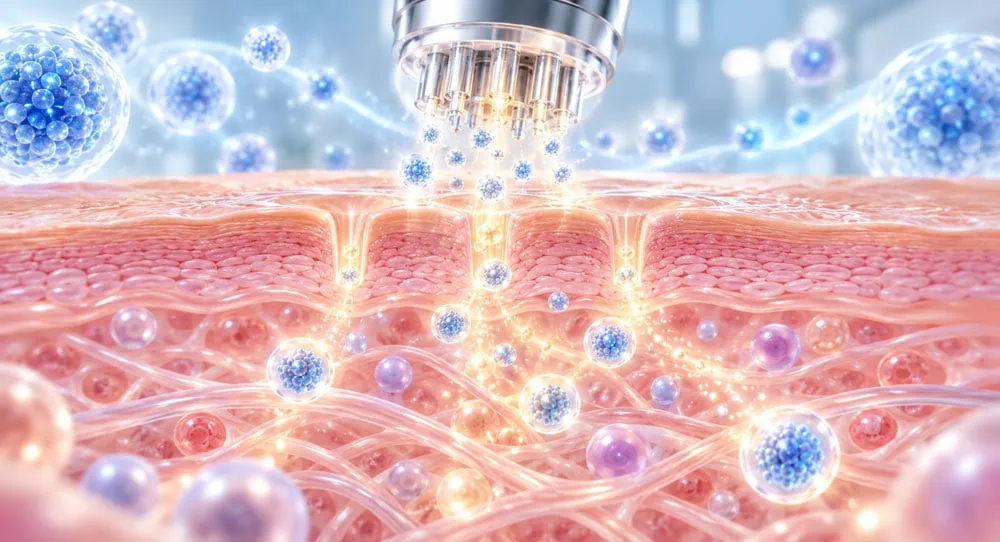
Prepare
The skin and treatment pathway are prepared according to the procedure being performed.
Apply
The selected formulation is used according to its intended protocol and delivery method.
Recover
Aftercare is focused on supporting barrier comfort and avoiding unnecessary irritation during recovery.
Exosomes vs Growth Factors
Growth factors are individual signalling proteins. Exosomes are vesicles capable of carrying a broader mixture of molecular cargo, which may include proteins, lipids and nucleic acids.
The terms should not be used as synonyms. A formulation containing growth factors is not automatically an exosome product, and an exosome product may have a much more complex composition.
Exosomes vs PRP
PRP is prepared from the client's own blood and contains platelets plus a mixture of platelet-derived signalling molecules. Exosome-based formulations are produced differently and do not involve collecting the client's blood during the appointment.
Both are discussed in regenerative aesthetics, but their source, preparation and evidence base are different.
Exosomes vs Polynucleotides
Polynucleotide products are based on purified nucleotide polymers, whereas exosomes are lipid-membrane extracellular vesicles with complex molecular cargo. Their mechanisms and regulatory classifications are not the same.
A useful consultation should therefore start with the treatment goal rather than treating all “regenerative” products as interchangeable.
What Skin Goals May Exosome Regenerative Treatments Support?
- Recovery-focused care after selected aesthetic procedures.
- Support for smoother and better-conditioned skin appearance.
- Protocols aimed at overall skin quality rather than dramatic volume change.
- Hydration and comfort as part of a broader treatment plan.
- Clients interested in regenerative aesthetics with realistic expectations.
What Exosome Treatments Cannot Promise
- They cannot guarantee that skin will “regenerate” like new tissue.
- They should not be presented as a cure for dermatological disease.
- They do not replace surgical lifting, fillers or energy-based tightening when those are the actual treatment goals.
- They do not produce identical results across different products or sources.
- They should not be treated as proven simply because laboratory biology is promising.
Why Product Source and Quality Matter
Exosome products can differ substantially in biological source, isolation method, purification, concentration, storage and quality control. Those differences make product selection more important than the word “exosome” on a label.
Current reviews of cosmetic dermatology repeatedly note the lack of uniform protocols and the need for stronger human clinical evidence. Regulatory treatment also varies by jurisdiction.
Are Exosome Treatments FDA Approved?
In the United States, the FDA states that there are currently no FDA-approved exosome products. That US regulatory position does not determine how a cosmetic product is classified in Spain, but it is a useful reminder that marketing claims should not run ahead of evidence or local regulation.
Who May Be Considered for an Exosome-Based Protocol?
Recovery-focused clients
When the main goal is supportive care around a selected aesthetic procedure.
Skin-quality goals
When texture, hydration and overall condition matter more than adding volume.
Regenerative interest
For clients interested in emerging regenerative protocols who understand that evidence is still developing.
Individual planning
Suitability depends on skin condition, product choice and the procedure being combined with it.
When Should Treatment Be Postponed?
Active infection, open skin, significant irritation or an uncontrolled inflammatory condition should be discussed before any regenerative aesthetic protocol. Recent procedures, medication and allergy history may also affect timing.
Exosome Regenerative Treatments at FBS Beauty Marbella
At FBS Beauty, regenerative protocols are approached as part of an individual aesthetic plan rather than as a one-product solution. The objective is to match the protocol to skin condition, treatment history and realistic priorities.
You can also explore Regenerative Aesthetics, the 3D/AI Skin Analysis guide and current FBS Beauty prices.
Frequently Asked Questions About Exosome Regenerative Treatments
What are exosomes?
Exosomes are small extracellular vesicles released by cells. They can carry proteins, lipids and nucleic-acid cargo involved in cell-to-cell communication. They are not living cells and they are not the same thing as stem cells.
Are exosomes stem cells?
No. Stem cells are living cells capable of self-renewal and differentiation. Exosomes are cell-free vesicles released by cells and function mainly as carriers of biological signals.
How are exosomes used in aesthetic treatments?
They may be incorporated into topical regenerative or recovery-focused protocols, sometimes alongside controlled procedures such as microneedling. The exact use depends on the product instructions, skin condition and professional plan.
Do exosomes rebuild collagen?
Laboratory and early clinical research is investigating signalling pathways related to extracellular-matrix remodelling, but that does not mean every cosmetic exosome product can guarantee new collagen formation. Claims should stay product- and evidence-specific.
Are exosomes the same as growth factors?
No. Growth factors are signalling proteins. Exosomes are membrane-bound vesicles that may carry many types of molecular cargo, potentially including proteins, lipids and nucleic acids.
Are exosomes the same as PRP?
No. PRP is prepared from the client's own blood, while exosome-based products are manufactured separately. Their composition, source and treatment workflow are different.
Can exosomes be used after microneedling?
Some aesthetic protocols combine exosome-based formulations with microneedling or related procedures, but the appropriateness depends on the product, delivery instructions and professional assessment.
Are exosome treatments proven?
The biological science around extracellular vesicles is substantial, but cosmetic clinical evidence is still developing and protocols are not standardised. Promising research should not be confused with guaranteed results from every commercial product.
Is there downtime?
Downtime depends more on the procedure paired with the formulation than on the word “exosome” itself. A topical protocol may be gentle, while microneedling or RF microneedling can produce temporary redness and sensitivity.
Where can I ask about exosome regenerative treatments in Marbella?
FBS Beauty is located at Av. Ricardo Soriano, 54, 29601 Marbella, Málaga. A consultation can help determine whether a regenerative protocol fits the skin concern and broader treatment plan.
Start with the skin goal, not the trend. FBS Beauty can review your skin condition, previous treatments and the role a regenerative protocol may realistically play.